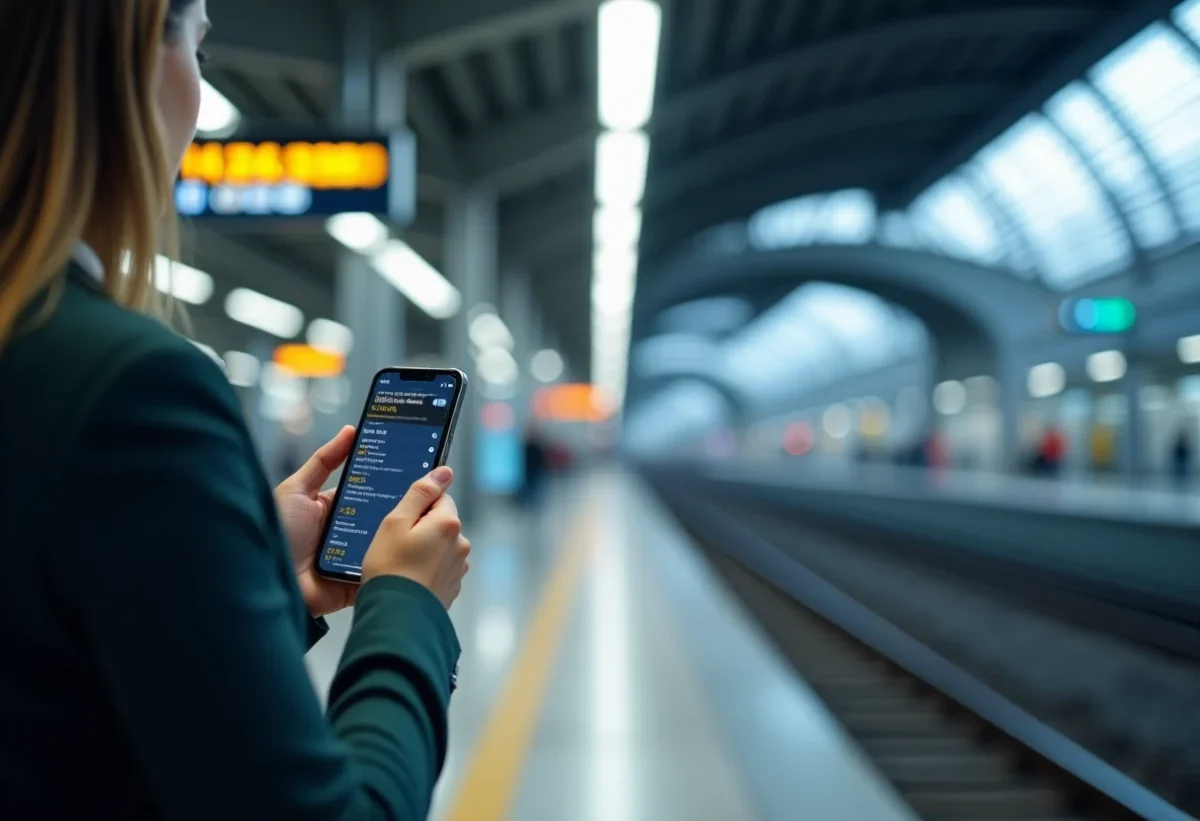
Daily commutes using public transport can often turn into real puzzles. Fortunately, digital advancements are providing solutions to make these journeys smoother and more efficient.
Thanks to mobile applications, it is now possible to check real-time schedules for buses, subways, and trams, avoid delays, and plan routes in the blink of an eye. Features such as alerts on disruptions or suggestions for alternative routes help optimize every trip.
These digital tools also offer additional services such as ticket booking or real-time vehicle tracking. They have become indispensable allies for anyone looking to travel stress-free and save time on a daily basis.
Digital tools for planning your journeys
Digital innovations are transforming the planning of public transport journeys. Companies like SYSTRA are developing cutting-edge tools that facilitate trip organization. The platform transport.data.gouv.fr centralizes and disseminates data from numerous operators, supported by DGITM, to promote the interoperability of mobility services.
Services offered by applications
Public transport applications offer a multitude of features:
- Real-time consultation of schedules and arrivals
- Planning of optimized routes
- Receiving alerts on disruptions
- Buying and reserving tickets
For example, the service Selfservice Keolis allows users to manage their journeys independently, providing updated and personalized information according to user needs.
Initiatives from public stakeholders
The Mobility Orientation Law plays a key role in defining the rights and obligations of MaaS (Mobility as a Service) operators. The SNCF will implement the rail pass in the summer of 2024, facilitating access to various modes of public transport through a single interface.
These initiatives, combined with technological advancements, aim to simplify the user experience while optimizing the efficiency of transport networks. France is thus positioning itself as a major player in the digital transformation of the mobility sector. 
Optimize your journey in real-time with mobile applications
Technological advancements offer unprecedented solutions to optimize public transport journeys. For example, mobile applications incorporating artificial intelligence, like those used by SNCF Réseau and Ilévia, can predict mobility behaviors and adjust services accordingly.
Advantages of real-time applications
These tools offer several advantages:
- Instant consultation of schedules and delays
- Personalized alerts in case of disruptions
- Recommendations for alternative routes
The application GenAI exemplifies this digital transformation well. By analyzing real-time data, it provides a user experience that is both personalized and optimized, thereby reducing wait times and inconveniences.
Collection and use of mobility data
Companies like Google and Uber collect mobility data to improve services and adapt transport offerings. This information is crucial for anticipating user needs and smoothing traffic flow.
The TPG (Geneva Public Transport) also leverages AI to analyze mobility behaviors and optimize transport networks. These practices demonstrate that the integration of new technologies in public transport is not only a reality but also a necessity to meet the challenges of urban mobility.