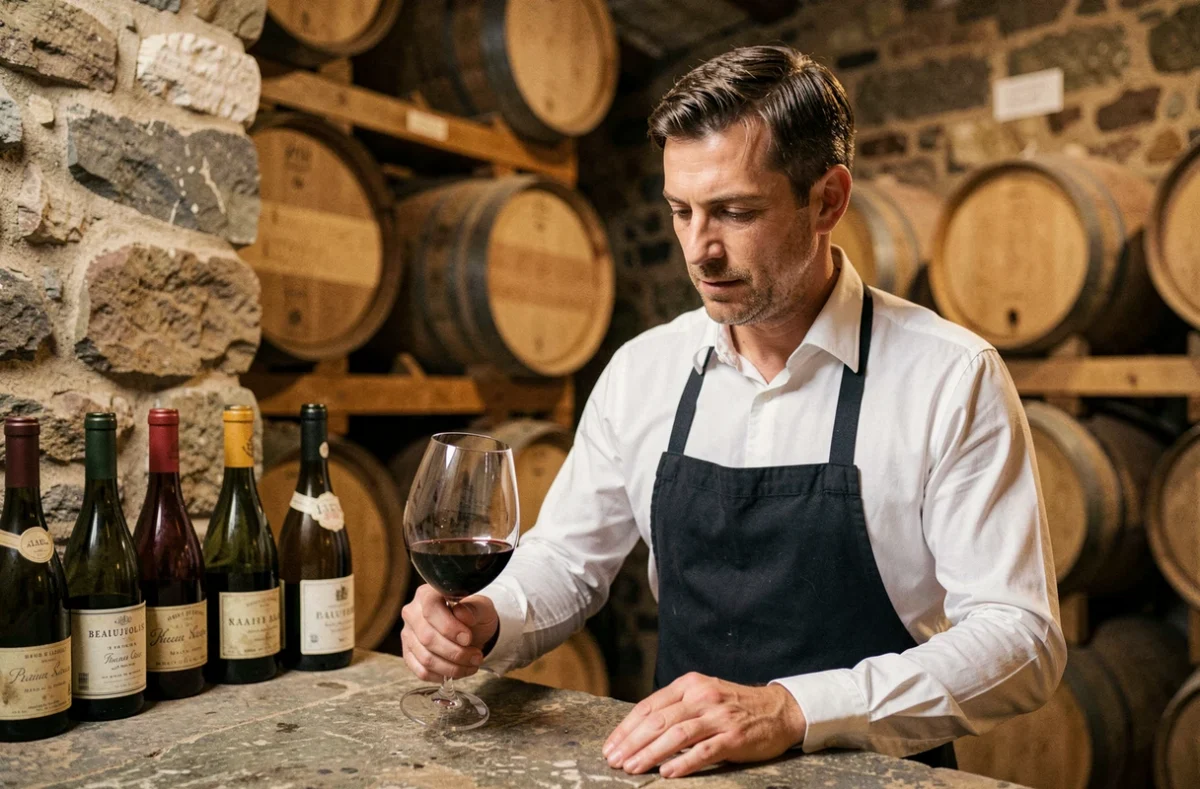
The Beaujolais wine region has 12 appellations d’origine contrôlée, including 10 communal crus located in the northern part of the region, between Mâcon and Lyon. They are all made from Gamay Noir à Jus Blanc, which accounts for around 97% of the local vineyard area. Despite sharing the same grape variety, each cru develops a distinct aromatic profile shaped by soil type, altitude and vineyard exposure.
What the cru’s name doesn’t tell you about what’s in the glass
Descriptions often assign a typical profile to each appellation: Fleurie is said to be floral, Morgon structured, and Chiroubles light and airy. These guidelines are useful when choosing a wine, but they simplify a more nuanced reality.
Within the same appellation, the named vineyard site, vintage and winemaking choices can significantly affect the result. Two neighboring plots with different subsoils and distinct ageing methods can produce very different wines.
To compare the crus, it’s more reliable to taste wines from the same vintage, made using similar methods and served at the same temperature in similar glasses. Without this precaution, you risk confusing the effects of terroir with those of serving conditions or palate fatigue.
When trying to understand the 10 great crus of Beaujolais, distinguishing between a theoretical profile and what’s actually in the bottle is the first filter to apply.
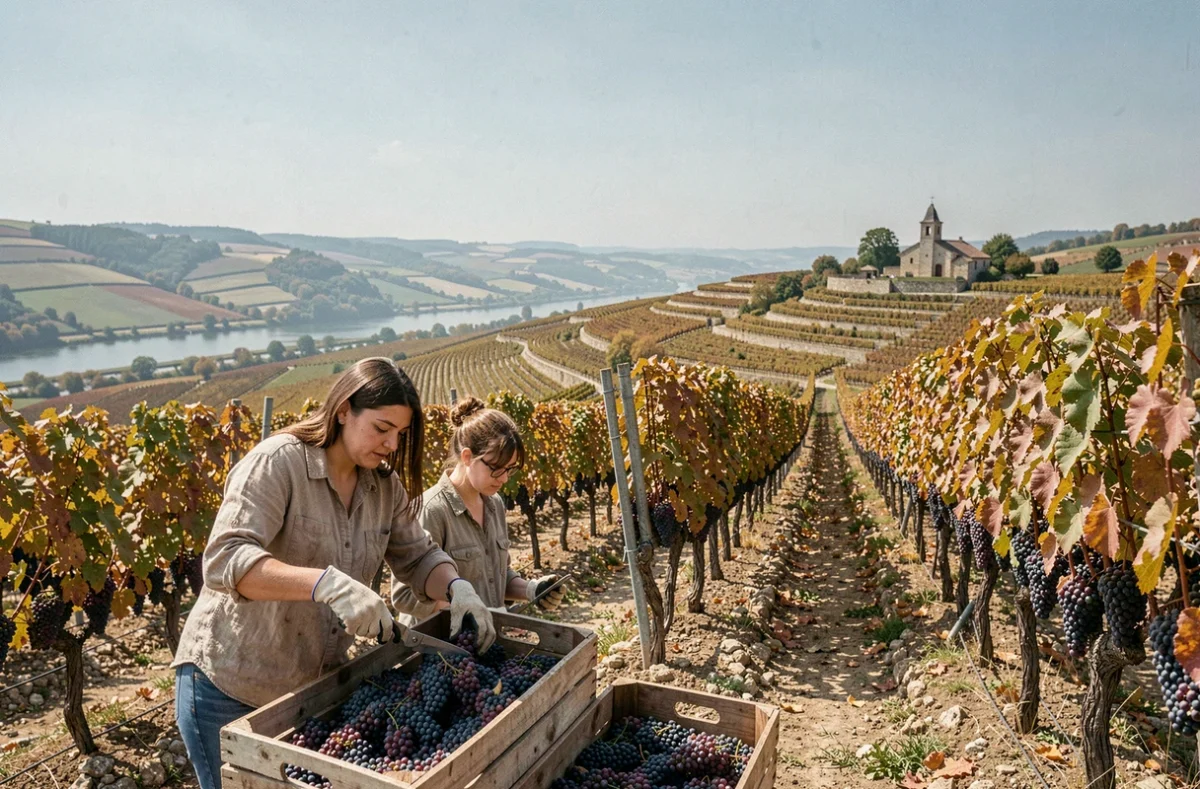
Beaujolais soils and aromatic profiles: three families to look out for
Rather than reviewing the ten crus one by one, grouping the appellations by soil type makes it easier to anticipate what you’ll find in the glass. Three broad families emerge.
Light granite soils and floral wines
Fleurie, Chiroubles and Saint-Amour share light, often sandy granite soils, at some of the highest elevations in the region. The wines gain freshness and aromatic finesse. Look for notes of iris, violet and small red berries (redcurrant, raspberry), with a supple palate and sometimes a peppery finish.
Chiroubles, situated on the higher slopes, takes this style furthest: its wines are often the lightest and airiest of the group, best enjoyed within the first few years.
Schist, manganese and tannic structure
Morgon and Moulin-à-Vent are the crus most often compared to Burgundy wines. In Morgon, decomposed schist soils (locally known as “rotten earth”) produce full-bodied wines with aromas of black cherry and kirsch, sometimes developing notes of cocoa after a few years of ageing. Morgon and Moulin-à-Vent can age for ten to fifteen years, depending on the cuvée.
Moulin-à-Vent, grown on pink granite rich in manganese, develops spicy notes and a denser texture over time. These two crus benefit most from decanting.
Intermediate profiles
Brouilly, Côte de Brouilly, Régnié, Chénas and Juliénas occupy a stylistic middle ground between the two groups above. Their soils combine granite, sandstone and sometimes clay, producing wines that balance fruit with moderate structure.
- Brouilly, the largest appellation, offers rounded, fruity reds centered on cherry and vineyard peach, and is approachable when young.
- Côte de Brouilly, on the volcanic slopes of Mont Brouilly, has greater concentration and minerality than its neighbor.
- Chénas, the smallest cru by area, remains relatively under the radar commercially but produces spicy, oaky wines that can sometimes resemble Moulin-à-Vent.
- Juliénas combines ripe fruit aromas (blackberry, blackcurrant) with a floral touch. Its varied soils make the appellation difficult to sum up in a single sentence.
- Régnié produces supple, fruity wines, often at a more accessible price than its neighbors.
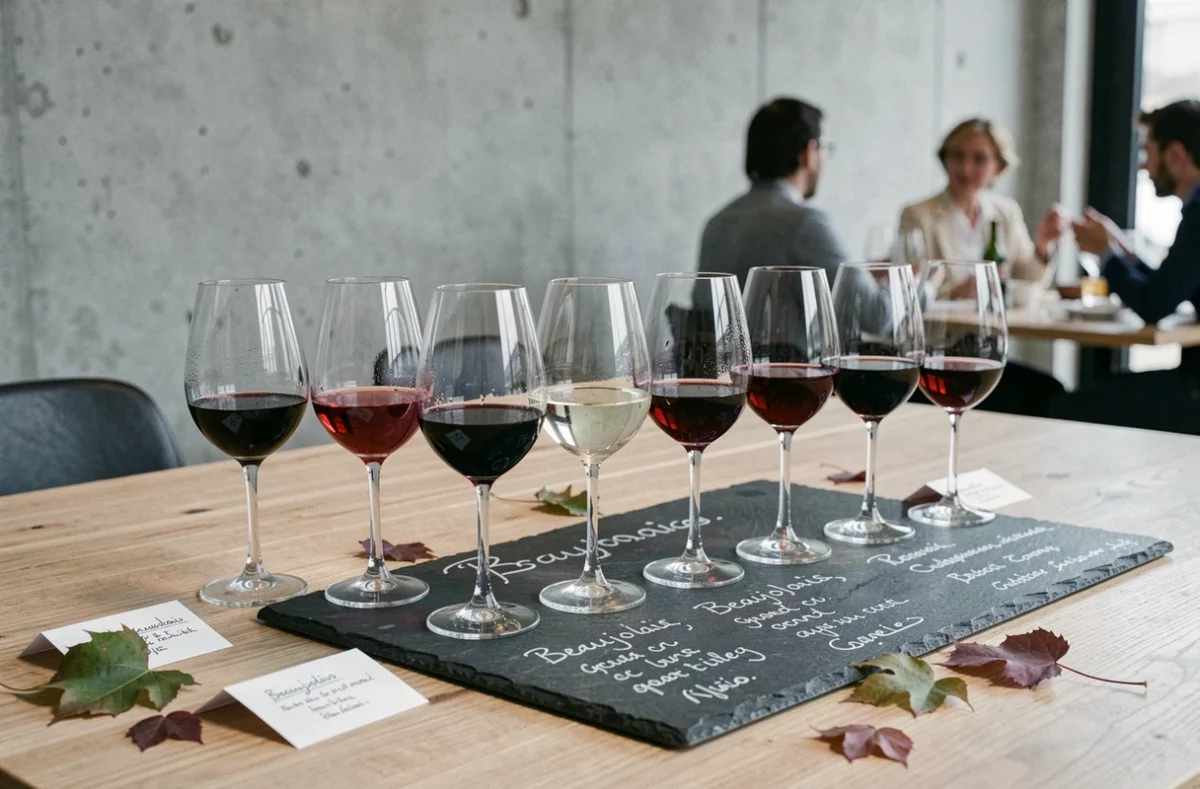
Comparative tasting of Beaujolais crus: a method based on contrasts
Lining up ten bottles on a table seems logical, but palate fatigue starts to cloud your perceptions after the fifth or sixth wine. You’ll get better results by tasting three or four crus per session, organized around a contrast.
First session: contrast supple wines with structured ones. Taste a Chiroubles or Fleurie alongside a Morgon or Moulin-à-Vent from the same vintage. The difference in texture and length on the palate becomes immediately clear, even to an inexperienced taster.
Second session: explore the intermediate profiles. Comparing a Brouilly, a Juliénas and a Chénas helps reveal the nuances between crus that are often seen as similar. Serving them at the same temperature eliminates a common source of bias.
This contrast-based method helps build sensory memory gradually. Over several sessions, your nose will more quickly pick up the minerality of a Côte de Brouilly or the kirsch notes of a Morgon, without needing to reread the back label.
Ageing and aromatic development: not all crus age in the same way
Ageing potential is one of the most misunderstood aspects of Beaujolais. Ageing is an option, not an obligation, and not all crus benefit equally from it.
Lighter crus (Chiroubles, Régnié, Saint-Amour) show their best profile within the first two to six years. Waiting longer won’t add complexity and may diminish the fruit that gives them their charm.
More structured crus (Morgon, Moulin-à-Vent and some Chénas) develop well over a decade or more. Primary red-fruit aromas give way to tertiary notes of forest floor, truffle, leather and sweet spices. This evolution is reminiscent of certain Burgundy Pinot Noirs, which explains why the comparison is so common.
However, ageing depends as much on the vintage and producer as on the appellation. The same cru can be made for immediate fruitiness or for ageing, depending on the choices made during maceration and ageing. Reading the back label or asking a wine merchant about the cuvée’s style will give you a more reliable indication than the appellation name alone.
Identifying the flavors of Beaujolais crus comes less from memorizing a tasting note than from comparing wines repeatedly across several vintages. The soil and style guidelines described here are a starting point, not a definitive framework. Every bottle you open sharpens your mental map—and that’s precisely what makes this wine region so rewarding to explore.