Distinguishing between reindeer, deer, roe deer, and moose may seem difficult for the uninitiated. However, these four species of cervids, while closely related, exhibit fascinating distinctive characteristics. It is essential to understand these differences to fully appreciate the diversity of wildlife that nature has to offer. Each species has its own unique traits, whether in terms of size, behavior, or habitat. Let’s explore these four species of cervids, focusing on their distinctions and singularities, to enrich our knowledge of wildlife.
Cervids: Fascinating Diversity of Wildlife
When examining the distinctive physical characteristics of deer, reindeer, roe deer, and moose, one cannot help but notice the uniqueness of each species. It is crucial to mention the term ‘deer reindeer’, which can be confusing. Indeed, there is no animal called ‘deer reindeer’. It is either a deer or a reindeer, as they are two distinctly different species although belonging to the same family of cervids.
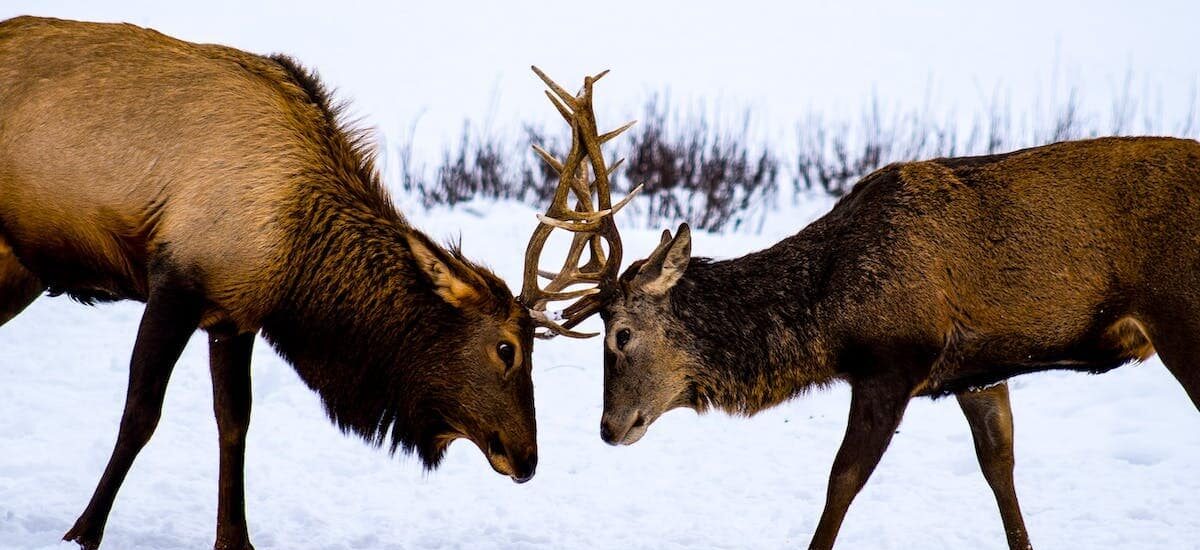
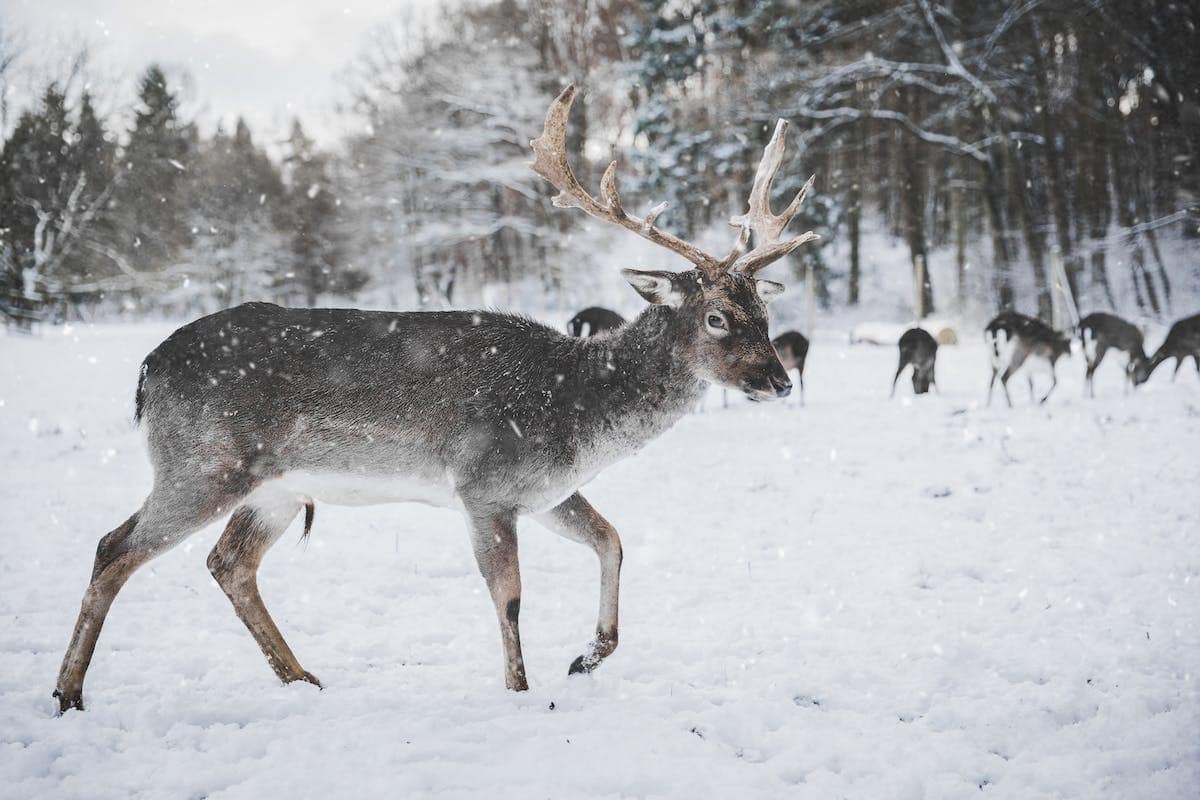
The deer is famous for its imposing antlers, which only the male possesses. These majestic antlers are often used in battles to establish dominance during the rutting season. The coat of the deer varies with the seasons, ranging from a reddish-brown in summer to a dark gray-brown in winter.
On the other hand, the reindeer has a pair of less spectacular antlers, but they are equally important in its social interactions. An interesting feature of this species is that, unlike other cervids where only males have antlers, female reindeer also possess them.
As for the roe deer, smaller and slimmer than its cervid cousins, it has an agile silhouette with a color varying from reddish-brown to gray-brown depending on the seasons. Its distinctive sign remains its white rear visible when it flees.
The moose, for its part, impresses with its massive size and long, sturdy legs supporting a powerful body topped with a wide head featuring a prominent snout and visible auditory canals.
Each species also has its own habitat that corresponds to the aforementioned specifics: thus, if you spot a copper-colored creature bounding in your European garden—probably after munching on your rose bushes—it’s surely Mr. Roe Deer, whereas in North America, it’s more likely Bambi… or should I say Deer? Over there, they call ‘deer’ any four-hooved animal!
The massive cross-border migrations would remind you more of our reindeer friends, while if you find yourself face-to-face with something that vaguely resembles a horse crossed with a camel during your Swedish hike… I fear, my friends, that we are probably talking about Moose!
In all these cases, be cautious! We all coexist on this planet, and the better we understand our local flora, the easier our harmonious coexistence will be.
Physical Characteristics that Distinguish Them
When addressing the question of habitats and distribution areas, it is essential to emphasize that these four species occupy distinct territories, adapted to their specific needs. The deer, for example, is found in the wooded regions of Europe, Asia, and North Africa. It is also present in North America where it has been introduced.
The reindeer, on the other hand, primarily inhabits the arctic and subarctic regions of the northern hemisphere. It moves across vast expanses during its seasonal migrations to find rich grazing pastures. These movements can cover several thousand kilometers.
The roe deer prefers open forest environments such as edges and clearings. It can be found in Europe, Western Asia, and North Africa.
The moose thrives in the boreal forests of North America, Eurasia, and even Scandinavia. Swamps and wetlands also constitute a favored habitat for this majestic creature.
Habitats and Distribution: Where to Find Them
The distinctions also continue at the level of dietary habits and hunting behaviors of these magnificent animals.
The reindeer, with its extraordinary adaptation capabilities, is a herbivore that primarily feeds on lichens. These nutrient-rich plants are abundant in the polar regions where the reindeer lives. However, when they are not available, the reindeer does not hesitate to consume various types of grasses and seedlings to meet its nutritional needs.
As for the deer, it is also a herbivore, but its diet varies slightly with the seasons. During summer, it prefers a diet rich in fresh grasses and tender leaves found in meadows and underbrush. In winter, when vegetation becomes scarce, the deer turns to tree bark and certain shrubs to survive.
The roe deer enjoys a broader variety of foods, including grasses, young tree shoots, and shrubs, as well as fallen fruits and mushrooms found in its preferred forest territory.
The moose has an unparalleled appetite among these four species. It can consume up to 20 kg of food per day! Tree leaves constitute its main food source, but it also does not shy away from browsing low branches, especially during the icy months when they are accessible after snowstorms.
Regarding hunting behaviors, a significant distinction is noted between the deer and the roe deer on one hand, and the reindeer and the moose on the other. The deer and the roe deer are solitary animals that manage on their own to find food, while the reindeer and the moose have adopted a gregarious lifestyle with collective strategies when it comes to seeking sustenance.
Reindeer herds can number several hundred or even thousands of individuals. They move together over long distances in search of the best grazing areas. This allows them to minimize risks from predators such as wolves or polar bears, while also increasing their chances of survival by optimizing food search.
As for moose, they also form significant social groups during certain periods, as each winter they migrate to areas where food is more abundant. This grouping not only increases their safety against predators but also facilitates the location of food resources in these vast inhospitable forested expanses.
This overview of dietary habits and associated hunting behaviors among these four species highlights once again their remarkable adaptation to their respective habitats. These subtle distinctions contribute to diversifying our global wildlife heritage while requiring increased efforts for their conservation so that they can continue to amaze our eyes and enrich our ecosystem.
Dietary Habits and Hunting: Behaviors to Decode
In nature, the reproductive cycles and social behaviors of animals are as fascinating as they are varied. The differentiations between reindeer, deer, roe deer, and moose are no exception to this rule.
Let’s start with the reindeer. Its breeding season occurs in autumn when males engage in spectacular fights to win over females. These impressive jousts highlight their strength and dominance in the social hierarchy of the herd. Once the battle is won, the male mates with several females within a harem that he fiercely defends.
The deer also follows a well-defined reproductive cycle. During autumn, commonly referred to as ‘the rut’, males emit powerful calls to attract females and mark their territory. They also use their majestic antlers to impress rivals during intense battles.
As for the roe deer, its breeding season is different as it occurs earlier in the year, generally towards the end of spring or the beginning of summer. Males then compete to mate with females through a series of confrontations where they showcase their antlers with formidable branching.
The moose also has a particular mode of reproduction. Mating primarily occurs between September and October when young males begin actively seeking a partner among the available females in their respective territories. Once the choice is made, females give birth to a single calf, sometimes two in rare cases.
The social behaviors also vary among these species. Reindeer and moose are known to form large herds where cooperation is essential for the survival of the group. This social dynamic particularly favors protection against predators and facilitates food searching in their often difficult-to-access habitat.
The deer and the roe deer, on the other hand, adopt a more solitary lifestyle. They generally move alone or in small family groups consisting of a female and her young. It happens that several deer gather during autumn during the rut to compete for attracting females.
Although they share some common traits, the differentiations in reproductive cycles and social behaviors between reindeer, deer, roe deer, and moose are remarkable. These particularities reflect their adaptation to the different environments in which they evolve, as well as their distinctive evolutionary strategies to ensure their survival in these varied habitats. The biological diversity represented by these magnificent animals deserves our respect and commitment to their preservation.
Reproduction and Sociability: The Mysteries of Cervid Cycles
The interactions between reindeer, deer, roe deer, and moose with humans are multiple and sometimes complex. In certain regions of the world, these wild animals have been domesticated for millennia to serve as work animals or to provide food for local populations.
The reindeer is undoubtedly the species with the closest relationship to humans. In some northern regions, particularly in Scandinavia and Siberia, reindeer have been herded by indigenous communities for generations. The Sami people use these animals for various purposes: they travel long distances with them to find new pastures, use their meat as a food source, and their skins for clothing.
The deer is also a valued animal in some countries where deer hunting is an integral part of local traditions. The majestic antlers of the deer are often sought after as trophies symbolizing virility and power. Game management allows for balancing this practice while preserving wild populations.
As for the roe deer, it attracts interest from both nature enthusiasts and farmers. Its unique beauty makes it a highly sought-after species for wildlife observation but can also cause some inconveniences when it ventures into agricultural crops near inhabited areas.
The moose, for its part, represents a true traditional symbol in some Scandinavian countries where this imposing animal embodies power and independence. Moose are often depicted in local arts and crafts, reflecting their cultural significance.
Despite this sometimes harmonious coexistence between these animals and humans, conservation issues arise. The degradation of their natural habitat due to increasing urbanization and the exploitation of natural resources directly impacts these wild species. Poaching for meat or trophies remains a serious threat to certain populations.
Conservation measures must be implemented to ensure the long-term survival of these magnificent species. Initiatives such as creating protected natural reserves, promoting eco-responsible tourism, or strengthening laws against poaching can help preserve these iconic animals.
Understanding the differences between reindeer, deer, roe deer, and moose goes beyond mere zoological curiosity. It also allows us to learn more about our relationship with them and our responsibilities as human beings regarding their protection and conservation for future generations.
Cervids and Humans: Conservation Issues and Fragile Coexistence
Beyond their physical differentiations, reindeer, deer, roe deer, and moose also possess specific behaviors that deserve exploration. Reindeer are known for their ability to migrate over long distances in search of food and pastures suited to the different seasons. Their regular movements can cover several hundred or even thousands of kilometers per year.
Deer, on the other hand, exhibit more territorial behavior. Males display imposing antlers that they use during fights to establish their supremacy and win the right to mate with females. These impressive rituals generally occur during the rutting season, where the atmosphere resonates with the powerful sounds of confrontations between rival males.
The roe deer takes a different approach to territory. It prefers to occupy a small domain that it fiercely defends against any potential intruder or male rival. The roe deer must understand the differentiations between reindeer, deer, roe deer, and moose not only to enrich our knowledge of the animal kingdom but also to better appreciate our responsibility in their preservation. These magnificent creatures deserve our respect and commitment so that they can continue to evolve harmoniously in the ecosystems that have been theirs for centuries.