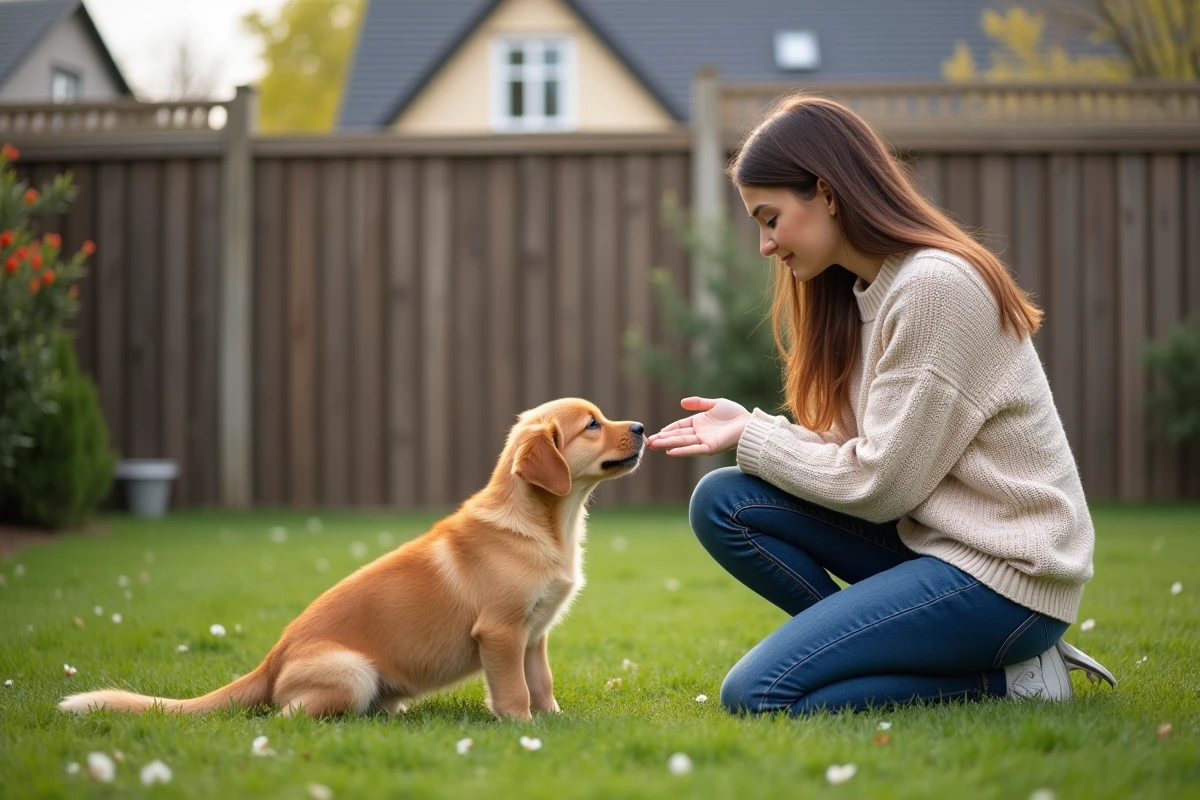
Forcing a dog to obey under threat instills fear at the heart of the relationship, and fear has never made learning sustainable. Yet, punitive methods persist, even though research leaves no doubt: the side effects are not worth it. Stress, blockages, undesirable behaviors… The assessment is clear.
In contrast, relying on positive reinforcement gives a whole new face to dog training. Motivation, trust, quality of the bond: everything improves, provided you avoid a few classic pitfalls. Punishing in the heat of the moment, lacking consistency—these are pitfalls that hinder progress. But simple adjustments, rooted in understanding canine behavior, are enough to change the game. Respectful approaches rely on careful observation to build solid and lasting foundations.
Understanding your dog’s needs and language: the key to successful training
Before thinking about teaching anything to a dog, you must learn to read it. Its body language says much more than we believe: ears, tail, posture, gaze… every detail reveals a feeling or intention. Ignoring these signals is like trying to communicate without speaking the same language.
Whether a puppy or an adult, the animal progresses much better when its needs are understood and respected. A companion that is bored, lacks exercise, or social contact often ends up developing issues. Conversely, establishing a stable and caring framework encourages curiosity and trust, making everything easier to learn.
The diversity of dog breeds makes it necessary to adapt methods. What works for a border collie may not necessarily resonate with an English bulldog. In terms of dog training, everything starts with observation and adjustment. To go further in this area, https://www.attitudecanine.fr/ precisely details the subtleties of canine language and suggests ways to adjust practices according to each animal‘s temperament.
Here are some concrete points to better decipher and support your dog on a daily basis:
- Identify calming signals to detect discomfort or fear in your dog;
- Adapt the duration of learning sessions to the concentration capacity of your puppy or adult dog;
- Avoid overwhelming stimuli, which can cause stress and unnecessary agitation.
Training is rooted in meeting essential needs: safety, play, rest, social interactions. Before considering teaching a command, lay these foundations.
Why prioritize positive methods for effective and stress-free training?
Adopting positive training is choosing a relationship based on trust and cooperation. Far from punitive techniques, this approach relies on motivation and reward. A kind word, a treat, a pat, an encouraging voice: each positive gesture motivates the dog to repeat the good behavior, not out of fear, but because it gains an immediate benefit.
Recent studies are clear: positive methods limit the risks of behavioral issues such as fear, aggression, or anxiety. By prioritizing reward over punishment, the dog becomes an active participant in its learning and cultivates the desire to cooperate. Far from being a chore, training transforms into a moment of sharing and bonding.
To reinforce this learning, several reflexes can make all the difference:
- Immediately praise the desired behavior.
- Offer an appropriate treat to encourage progress.
- Vary the difficulty of exercises to maintain your companion’s interest.
The reward, whether food or social, acts as a true engine of learning. It engages the dog in the exercise without pressure or fear. Progress then becomes synonymous with shared pleasure, and the animal‘s trust in its human is strengthened at every step.
Positive training is not just for puppies. All dogs, regardless of their age or breed, benefit from it. Observe, praise, adjust, and you will see the relationship transform, driven by true mutual understanding and respect.
Concrete tips for establishing good habits daily with kindness
Building a stable routine gives your dog reference points. Set schedules for meals, walks, and training sessions. Your companion, sensitive to regularity, feels more at ease when its environment remains predictable. For basic commands, a few principles facilitate implementation:
- Gradually establish “sit,” “down,” “stay,” keeping each session short and relaxed.
Repeat without rushing, focus on patience and positive reinforcement. The key: a calm atmosphere and appropriate progression.
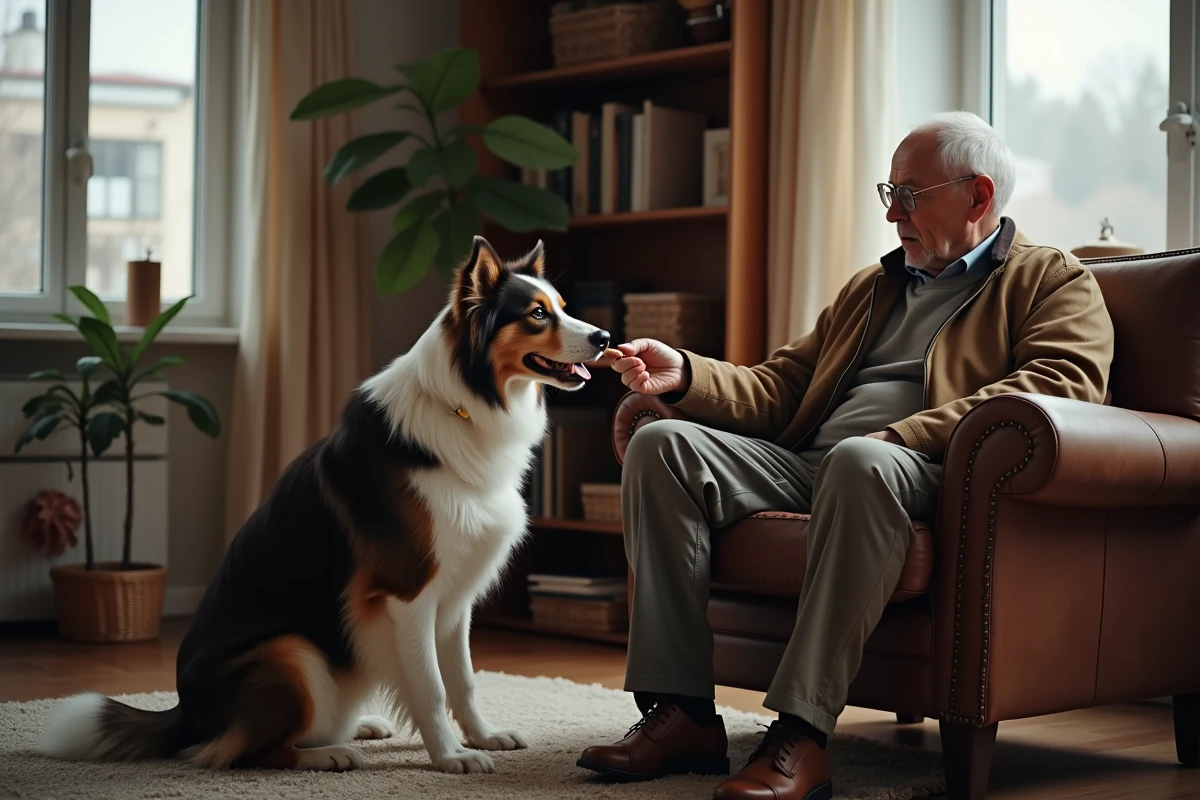
Rewards come in various forms. Besides treats, a kind word, a pat, or playtime with its favorite toy stimulate the desire to learn. Remember to vary the training situations: home, garden, quiet corner of the park… This diversity allows the dog to generalize its learning.
Learning house training requires rigor and attention, especially with a puppy. Take it out after every meal, upon waking, after playtime. As soon as it goes to the bathroom in the right place, praise it. There’s no need to punish afterward: the dog never associates punishment with the act, but with the presence of its human.
For a young dog, ten minutes is sufficient for a training session. Quality is better than quantity: end on a success, leaving frustration aside. Kindness, consistency, and regularity turn every interaction into an opportunity to learn together and strengthen the bond.