The stability of a concrete grass slab often depends less on the material than on soil preparation, a point that is frequently overlooked in outdoor landscaping. Leveling or spacing errors can compromise durability, even with products deemed robust. Contrary to popular belief, the compatibility between the slab and the nature of the ground directly impacts drainage efficiency and grass growth.
Implementation follows a precise methodology, tailored to the specific constraints of each space. Some processes, although simple, remain unknown even though they guarantee both an aesthetic and lasting result.
Choosing the right concrete grass slabs: essential criteria and tips for all budgets
The concrete grass slab is not trivial: it structures an outdoor space while allowing for vegetation, whether to delineate a path, install a terrace, or create a breathable parking area. Before purchasing, ensure that the model displays the NF standard: this marking guarantees appropriate resistance and real longevity, even under intensive use. It is also impossible to overlook the requirements of the local PLU: each municipality sets its rules for space development, and it is better to comply to avoid unpleasant surprises after installation.
The choices are plentiful. There are concrete grass slabs for every budget: economical versions for tight projects, high-end formats for those who want to enhance the appearance or finish. Before finalizing a cart, consider the load resistance: do you plan to pass a simple bicycle, pedestrians, or regularly accommodate a vehicle? Manufacturers offer a variety of shapes, sizes, and openings in the cells, which influence both aesthetics and future grass growth.
To assist you in this choice, here are the main options according to context and budget:
- If the area to cover is modest or cost is a priority, classic concrete slabs fit the bill: easy to handle, reasonable longevity, and the minimum for a solid result.
- For spaces that see cars or utility vehicles, opt for reinforced models designed to withstand mechanical stress without weakening.
Visual appearance is just as important as technique. The color and texture should harmonize with the spirit of the place: some prefer discreet mineral tones, while others seek a modern contrast. Before deciding how to lay concrete grass slabs, take the time to review each criterion: area, soil composition, water management, desired effect. It is this preparation that determines the success of the project, regardless of the budget invested or the area to be covered.
Key steps to successfully lay on soil and achieve a harmonious exterior
Soil preparation makes all the difference. Before even thinking about installation, clear the area of anything that could hinder: stones, roots, plant debris. The ground must be perfectly leveled, without bumps or hollows, to provide a stable base for the concrete grass slabs.
Next comes the time to create a suitable support. Spread a layer of sand or sand-gravel, a few centimeters is sufficient, then compact carefully with a roller or tamper. This substrate ensures leveling and promotes good drainage. A detail that changes everything, especially for areas exposed to the elements or for permeable parking in front of a garage.
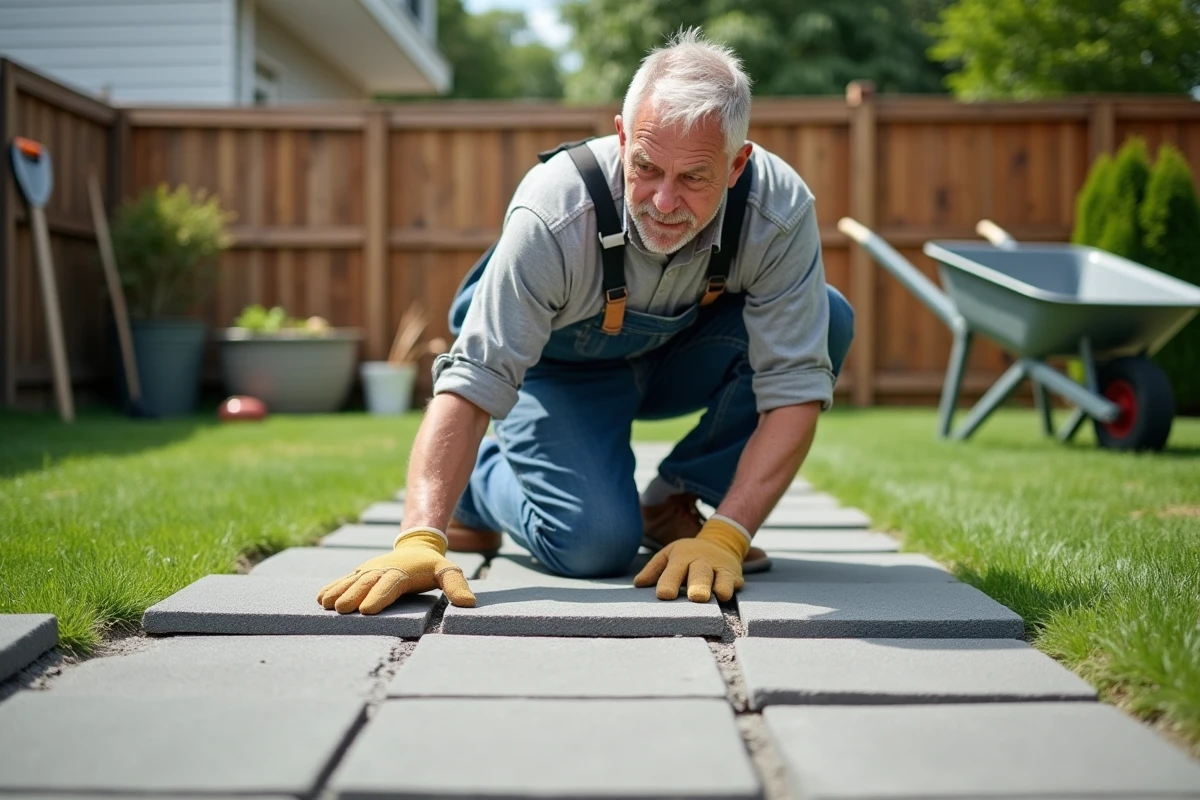
Place the slabs according to the chosen layout, allowing for a regular space for the joints: this is where the grass will take root, bringing a green touch and a natural integration to the whole. If you are working near a tiled terrace or a mineral area, align carefully to maintain visual harmony. A rubber mallet will allow you to adjust without risking cracking the slab.
For areas subjected to heavy use, such as garage driveways or utility access, increase the thickness of the sand-gravel layer. If the soil is loose or unstable, stabilization blocks will secure the whole. Once all the slabs are laid, water abundantly to help the substrate settle around the concrete and encourage grass regrowth in the designated areas.

Precautions, maintenance tips, and mistakes to avoid for a durable installation
A successful outdoor space is not limited to laying the slabs: the follow-up is just as important. In the first weeks, restrict access to the installed area to allow the grass to establish and the soil to stabilize. Monitor for any settling, especially after heavy rains, and correct as needed by adding a bit of sand or soil where necessary.
To care for your concrete grass slabs, equip yourself with a trimmer to limit grass growth between the slabs. Regular mowing, combined with reasonable watering, helps thicken the lawn and make it more resilient. A check of the joints is essential: a mixture of potting soil and grass will accelerate vegetation coverage and slow down weeds.
Some mistakes are easily avoidable and make all the difference in the long term. Never tighten the slabs too much: grass needs space to grow. The use of chemical weed killers is to be avoided: prefer manual or mechanical methods, which are much more respectful of the garden ecosystem.
Respecting the prescriptions of the PLU proves wise, especially for managing permeable surfaces and the overall appearance of the development. For the delivery of pallets, facilitate access to the site to avoid any incidents during unloading. Finally, regularly check the stability of the slabs, especially in high-traffic areas. It is this follow-up that ensures the durability of your installation and preserves the charm of your outdoor space.
A slab laid with care transforms the space and withstands the test of time. The precise action of today is the green pathways of tomorrow.