
A low-end silicone mold that distorts a cookie, a needle scale that approximates within ten grams, a whisk too soft to emulsify properly: most failures in home baking do not stem from the recipe, but from the equipment. Choosing your baking tools involves understanding some technical constraints that generic lists of utensils overlook.
Thermometers and precision tools for home baking
Without reliable temperature measurement, certain preparations are doomed to fail. Tempering chocolate requires following precise thermal curves depending on the type of couverture (dark, milk, white). An electronic probe thermometer, with an accuracy of one degree, is a better replacement for an alcohol thermometer or a finger dipped in cream.
This same tool is used to monitor the cooking of a custard, the temperature of a sugar syrup, or that of a brown butter. We recommend an instant-read model rather than an infrared thermometer, which is less reliable on moving liquids.
The electronic scale accurate to the gram is another pillar. In baking, a deviation of a few grams of baking powder or gelatin alters the final texture. Opt for a scale with a capacity of at least a few kilograms and a responsive tare function, to weigh directly in the mixing bowl without multiplying containers.
If you are looking for equipment at Gourmandises et Cie, you will find these precision tools grouped by use, which simplifies initial sourcing.
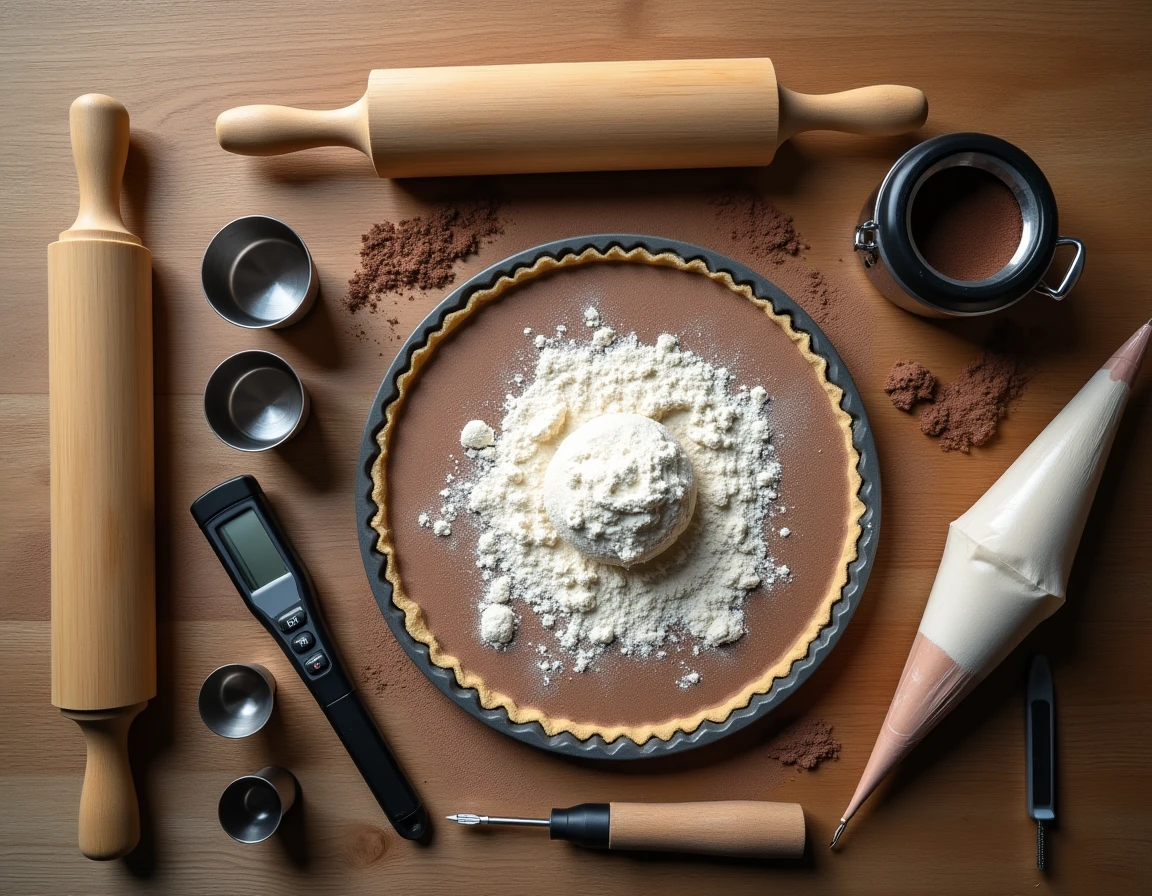
Redundancy of small equipment: spatulas, scrapers, and dedicated tools
Training programs focused on pastry diplomas now emphasize a point that general guides often ignore: having multiple copies of the same utensil is not a luxury. It is a lever for efficiency and hygiene.
In the midst of preparing a dessert, you move from a ganache to assembling a mousse, then to a glaze. Using the same spatula while rinsing it quickly between each step introduces two problems: traces of fat in a preparation that cannot tolerate it (like whipped egg whites, for example), and a loss of time that allows sensitive elements to cool or set.
What to duplicate as a priority
- Two to three silicone spatulas of different sizes, including at least one with a rigid handle for scraping thick mixtures like choux pastry
- Two plastic scrapers: one flexible for scraping bowls, one rigid for smoothing surfaces and portioning dough on the work surface
- Two offset spatulas (a small one for plating, a large one for spreading a glaze on a dessert)
This intentional redundancy also prevents cross-contamination between sweet and savory if you use your equipment for both categories.
Stainless steel molds and rings: an underestimated technical investment
Silicone dominates the consumer mold market. It has its qualities (easy release, flexible storage), but stainless steel rings and frames provide more even cooking and better support for dough during rising or cooling.
A good thickness stainless steel tart ring conducts heat to the edges of the dough, producing a consistently golden puff pastry or shortcrust. Silicone, being less conductive, often leaves pale bottoms and undercooked edges.
For desserts, a rectangular stainless steel frame (with rhodoid strips inside) allows for clean cuts and stable assembly. We observe that many amateur bakers invest in fancy molds before owning a good tart ring and a basic frame, even though these two shapes cover the majority of creations.
Choosing between food-grade stainless steel and aluminum
Stainless steel resists corrosion and can go in the dishwasher without alteration. Aluminum, sometimes offered at a lower cost, reacts to acidic preparations (red fruits, citrus) and deforms more easily. 18/10 stainless steel remains the professional standard for molds and rings.

Hygiene and safety: the overlooked equipment in lists
Baking equipment content focuses on preparation utensils and almost systematically overlooks the sanitary aspect. Professional standards and training programs do include these elements as essential equipment.
- Food contact disinfectant wipes to clean work surfaces between preparations, especially when handling raw eggs and then finished products
- Non-powdered disposable gloves, useful for shaping chocolate truffles or handling sticky candied fruits
- Finger cots or waterproof bandages, essential in case of cuts (a classic with the Microplane grater or paring knife)
- Dedicated baking towels, never used to dry regular dishes, to avoid transferring bacteria or odors
A clean work surface between each step is as crucial to the result as a good oven. Caramelized sugar, residual flour, or traces of egg yolk on a poorly cleaned surface compromise the adhesion of a glaze or the stability of a meringue.
Stand mixer: when the investment truly pays off
A planetary stand mixer only becomes truly worthwhile when you regularly make yeast doughs (brioche, baba) or Italian meringues. For shortbreads, creams, or simple cake batters, a good manual whisk and a hand-held electric mixer are sufficient.
The determining technical criterion is the motor power coupled with the bowl capacity. An undersized motor with a large bowl will struggle with dense brioche dough, heat up, and reduce its lifespan. Prioritize a coherent bowl/power ratio rather than a giant bowl that looks appealing on paper.
Baking equipment is not just a checklist of items to tick off. Each tool serves a specific action, and the quality of that action depends on the relevance of the initial choice. A well-sized stainless steel ring, a reliable thermometer, and three clean spatulas will yield more consistent results than twenty fancy molds stored in a cupboard.