Keno offers two daily draws, one at midday and the other in the evening, with twenty numbers drawn from a grid of seventy each time. Checking the results after each draw allows players to verify their grid, but also to feed into a statistical reading of the drawn numbers. The game’s operation is based on a simple principle: the more numbers the player marks that correspond to the draw, the higher the winnings, with a multiplier that can amplify the initial stake.
Keno Multiplier: A Mechanism That Changes the Calculation of Winnings
Most results pages display the twenty drawn numbers and then mention the multiplier without explaining its actual role. The multiplier is a coefficient drawn at the same time as the numbers. It can be worth two, three, five, or ten depending on the draw.
Specifically, if a player wins a base amount and the displayed multiplier is five, the amount received is quintupled. The option is not automatic: it must be selected at the time of validating the grid, incurring an additional cost on the initial stake.
By checking the midday Keno results on Annonces Tout Net, the multiplier from the last draw appears directly next to the numbers, making it easier to quickly calculate the potential winnings.
The key point to remember: the multiplier does not increase the chances of winning; it increases the amount if the player has already won. Activating this option means accepting a higher stake cost for a greater hope of winning, without changing the probability of finding the right numbers.

Midday and Evening Keno Draws: Times and Official Oversight
The midday draw takes place around 1:30 PM, and the evening draw around 9:30 PM. The results are published within minutes on the FDJ website and on specialized third-party platforms.
One element rarely detailed by results sites concerns the supervision of the draws. A justice commissioner attends each extraction to ensure the regularity of the operation. This presence constitutes the legal basis for the traceability of the draw.
For the player, the practical consequence is direct: the numbers displayed on official sites or authorized platforms are certified. Comparing results between two different sources should never reveal any discrepancies.
Deadline for Validating Grids
The grid must be validated before the closure of the games, which occurs a few minutes before each draw. Missing this window pushes participation to the next draw. Online players generally receive a warning when the closure is approaching.
Keno Number Statistics: Reading Frequencies Without Mistakes
Several sites now offer detailed frequency tables, filters by period, and even data exports. This evolution transforms the consultation of results into a true grid preparation tool.
Frequency statistics indicate how many times each number has been drawn over a given period. Some numbers appear more frequently than others in a limited sample, feeding into the notion of “hot” or “cold” numbers.
Here’s what these tools concretely allow:
- Identify the most frequently drawn numbers over the past weeks or months to guide grid selection
- Spot numbers that have been absent for a long time (“late” numbers), which some players choose based on statistical catch-up logic
- Cross data between midday and evening draws, as the two series are independent and can present distinct frequency profiles
- Export results in spreadsheet format to apply personal filters or sorting formulas
A fundamental methodological point remains: each Keno draw is an independent event. Numbers do not have memory. A number drawn ten times last month has exactly the same probability of being drawn in the next draw as a number that has been absent for three months. Past frequencies describe what has happened, not what will happen.
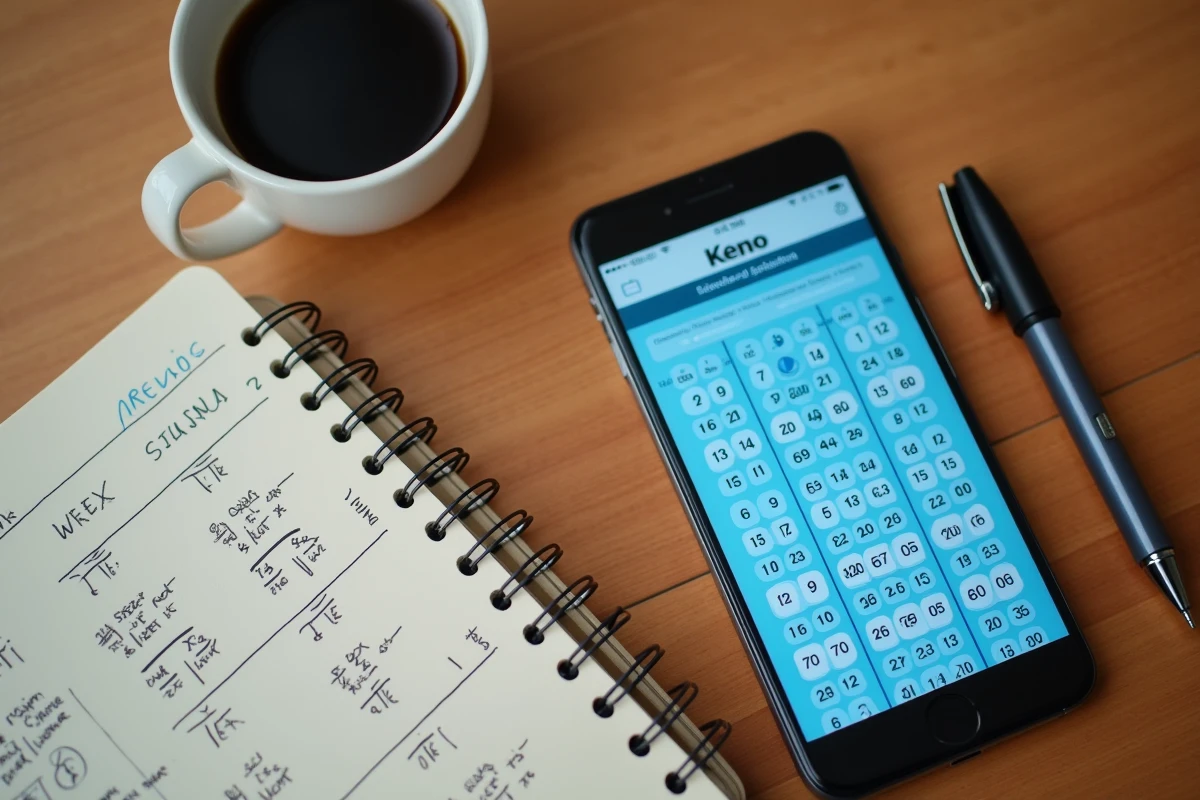
Joker+ Number and Keno Winnings Verification
In each draw, a Joker+ number is also drawn. This seven-digit number offers an additional prize independent of the twenty main numbers. The player who has subscribed to the Joker+ option compares their code with the one displayed in the results.
Winnings verification can be done in several ways:
- On the official FDJ website, by entering the numbers played or scanning the ticket’s barcode
- On mobile applications, some offering push notifications as soon as the results are published
- At point of sale, where the tobacconist scans the physical ticket to confirm any potential winnings
The Belgian National Lottery, for example, has introduced the possibility of scanning one’s ticket before the draw to receive an automatic alert once the results are known. This type of feature is beginning to become widespread and simplifies tracking for regular players.
Claim Deadline
A prize not claimed within the time frame set by the rules is forfeited. Checking results on the day of the draw, whether midday or evening, remains the most reliable method to avoid missing a win.
Keno remains a game of pure chance, where no strategy alters the base probability. Statistical tools and real-time results platforms provide comfort in tracking and better readability of data, but the drawing of each number remains strictly random. Regularly checking midday and evening results primarily serves to ensure no winnings are missed and to maintain a clear view of one’s gaming history.